Robotics & Automation
Light, stiff, repeatable components for motion systems
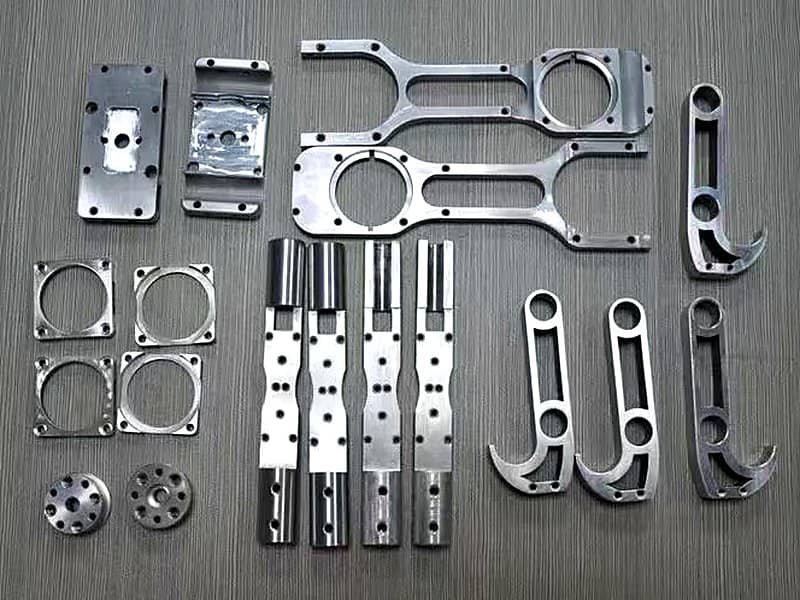
End effectors, joint housings, gearbox components, linear stages and EOAT tooling — machined in 7075 and 6061 with the pocketing and rib geometry that removes mass without losing stiffness.
Typical requirements
- High stiffness-to-weight geometry
- Bearing seat roundness within 0.005 mm
- Part-to-part repeatability across fleets
- Laser-marked part number and revision
- Kitted delivery for assembly
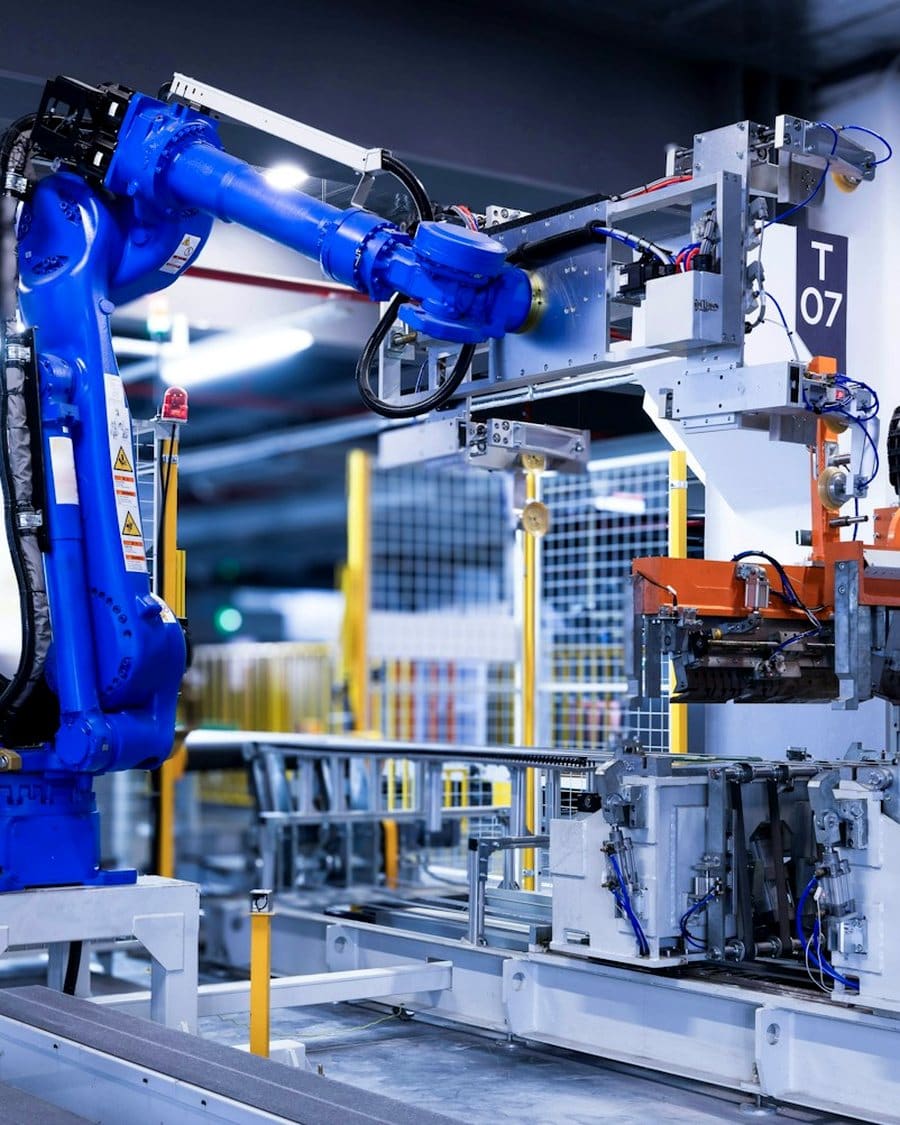
Components we machine
Mass and stiffness are the whole problem
Every gram at the end of a robot arm costs payload, cycle time and energy — but a part that flexes under acceleration destroys repeatability. Robotics components live at that trade-off, and machining is how it gets resolved.
We machine deep pockets with thin ribs, hold wall thickness within ±0.05 mm so finite-element predictions still apply to the real part, and stress-relieve between roughing and finishing so the geometry that leaves the machine is the geometry that stays.
Bearing and gear interfaces
Cross-roller bearing seats, harmonic drive and cycloidal gearbox interfaces need roundness and perpendicularity, not just diameter. We hold bore roundness within 0.005 mm and perpendicularity to the mounting face within 0.01 mm, verified on a CMM.
Repeatability across a fleet
When you build fifty identical robots, the fiftieth axis housing has to match the first. Our production control fixes the fixture, the programme revision and the tool list, and we monitor nominated dimensions with SPC so drift is visible before it becomes a non-conformance.
Integration-ready delivery
Parts arrive deburred, anodised, laser-marked with your part number and revision, and kitted per assembly if you want them that way — so your assembly technicians open a box and build, rather than sort.
Working in this sector?
We can share relevant references and quality documentation under NDA.
- Reviewed by a manufacturing engineer
- NDA available before file exchange