Wire EDM & Sinker EDM
Contactless cutting for hardened steel, sharp internal corners and burr-free edges
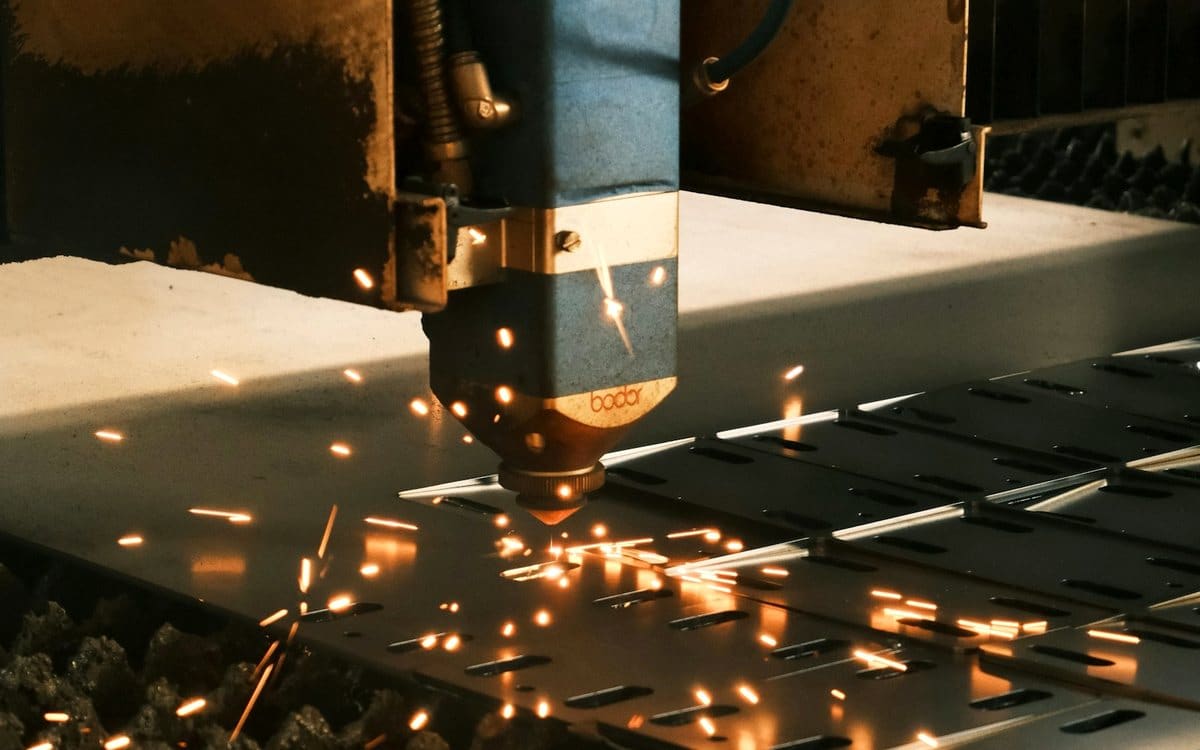
EDM removes material by spark erosion, so hardness is irrelevant and cutting forces are zero. It is the process of choice for hardened tool steel, thin delicate profiles, keyways and internal corners a milling cutter cannot produce.
Hardness is irrelevant
Zero cutting force
Sharp internal corners
Why it works
Hardness is irrelevant
Cut 62 HRC tool steel after heat treatment rather than before, and the distortion that hardening introduces never reaches your finished dimensions.
Zero cutting force
No tool touches the part, so 0.3-mm webs and fragile fins survive the process intact — geometry that would simply break under a milling cutter.
Sharp internal corners
A 0.05 mm internal radius is achievable — roughly one tenth of what the smallest practical end mill can produce in steel.
Process specification
| Wire diameter | 0.10 – 0.25 mm |
|---|---|
| Max workpiece (wire) | 600 × 400 × 300 mm |
| Positional accuracy | ±0.005 mm |
| Min internal radius | 0.05 mm |
| Max taper | ±30° over 100 mm |
| Surface finish | Ra 0.2 – 3.2 µm |
Tighter tolerances than those listed are achievable on review — please mark critical dimensions on your drawing.
Typical applications
- Blanking punches & dies
- Extrusion dies
- Keyways in hardened shafts
- Mould inserts & ribs
- Thin delicate profiles
- Collets & clamping elements
Compatible materials
Wire EDM
A brass or coated wire, typically 0.10 to 0.25 mm in diameter, is fed continuously through the workpiece while a dielectric flushes the gap. Because there is no mechanical contact, hardened 62 HRC tool steel cuts as readily as annealed material, and a 0.5-mm-thick part does not deflect.
We run four-axis machines with independent upper and lower guides, which allows tapered and transitioning profiles — a square on top blending into a circle at the bottom, for example.
Typical applications: extrusion dies, blanking punches and dies, keyways in hardened shafts, collets, tight-radius internal corners, and separating prototype parts from a plate without damaging them.
Sinker EDM
A shaped graphite or copper electrode is sunk into the workpiece to burn a cavity that mirrors its form. This is how blind pockets, deep ribs, sharp internal corners and complex three-dimensional mould detail get made in hardened steel.
Standard corner radius is 0.05 mm; smaller is possible with fine-finish electrodes. Surface finish ranges from Ra 3.2 µm on a roughing setting to Ra 0.2 µm on a mirror-finish cycle.
Accuracy and edge quality
Positional accuracy of ±0.005 mm is routine on wire work. The recast layer left by the spark is controlled by a finishing pass at reduced energy; where a drawing prohibits recast entirely, we follow with a light grind or etch and state that on the process plan.
Parts leave the wire burr-free by nature of the process, which removes a whole deburring operation from delicate components.
When to specify EDM on your drawing
Call out EDM when you need an internal corner radius smaller than 0.5 mm, when the material is already hardened, when the wall is too thin to withstand cutting force, or when you cannot accept the burr and edge roll that milling leaves behind.
Frequently asked
How quickly will I receive a quotation?
Most quotations are returned within 24 working hours. Simple turned or milled parts are often priced the same day; assemblies, multi-process jobs and requests requiring a material enquiry may take up to two working days. If a quotation will take longer, we tell you when to expect it rather than leaving you waiting.
What files do you need to quote?
A 3D model in STEP, Parasolid (X_T) or IGES is enough to start. Where the part carries tolerances tighter than ISO 2768-m, GD&T, surface finish callouts or thread specifications, please add a dimensioned 2D drawing as PDF or DWG. Telling us the quantity, material and required finish avoids a round of questions and usually gets the price back the same day.
Is there a minimum order quantity?
No. We machine single prototypes as readily as 20,000-piece releases. There is a minimum order value on very small jobs to cover setup and programming, which we state clearly in the quotation — there are no charges that appear later.
What actually drives the price of a machined part?
Four things, roughly in order: the number of setups, cycle time, material cost and the tightest tolerance on the drawing. A tolerance of ±0.01 mm where ±0.1 mm would function can add 30 % to the price, and a feature that forces a fourth setup can add more. Our quotations flag these drivers so you can decide whether the requirement is worth the cost.
Need this process for your part?
Send your drawing and we will confirm feasibility, cost and lead time.
- Reviewed by a manufacturing engineer
- NDA available before file exchange