Stainless Spindle Shaft — Hard Turned to Ra 0.2 µm
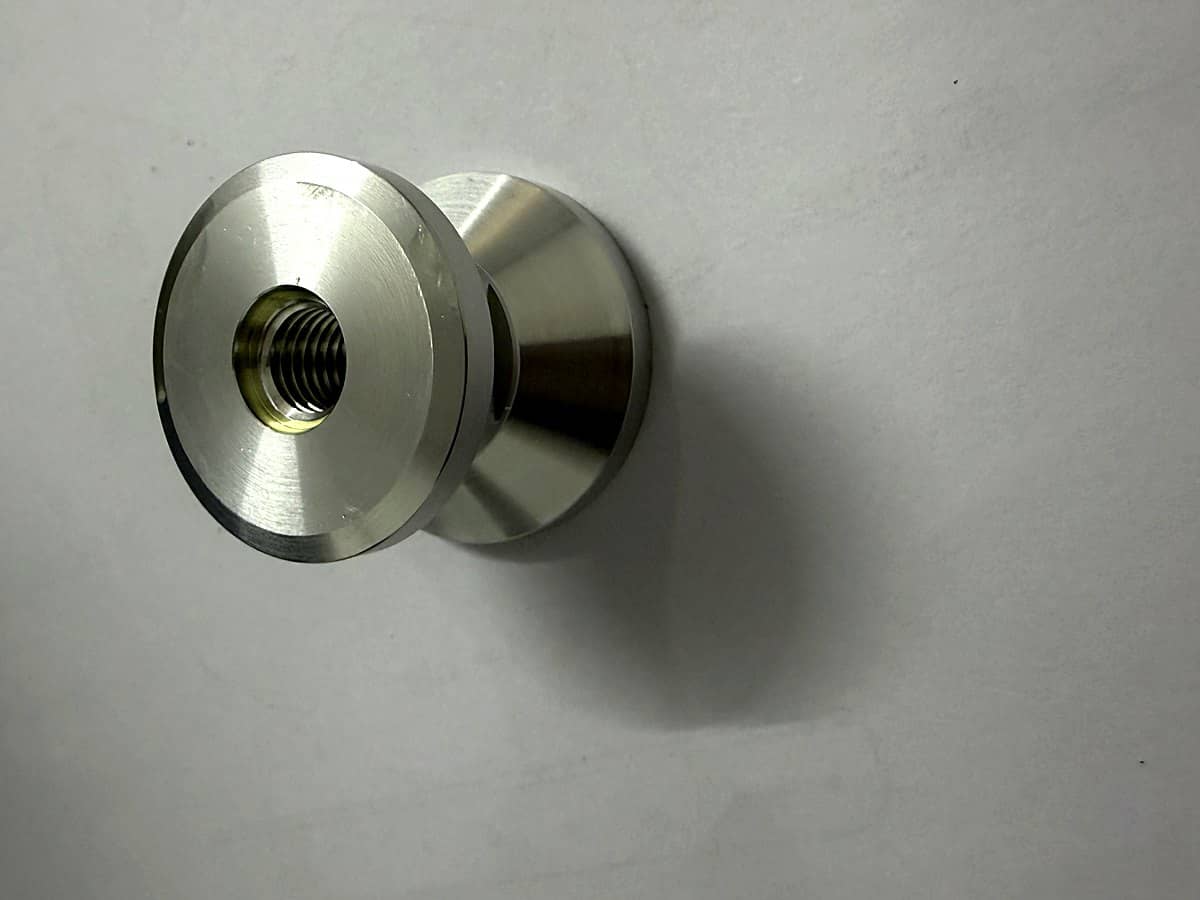
A 17-4PH spindle shaft hard-turned to H900 condition, reaching Ra 0.2 µm on the sealing diameter without a grinding operation.
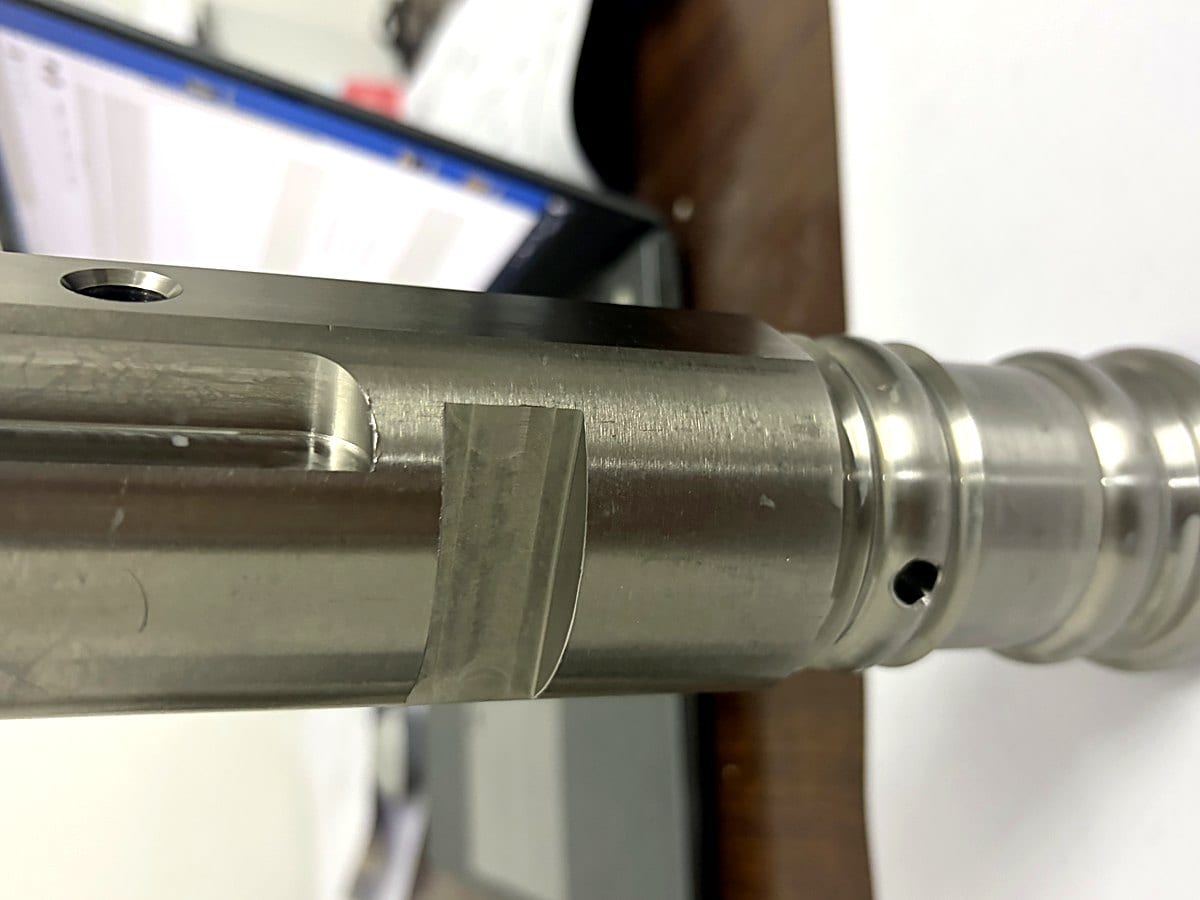
Part specification
- Industry
- Energy, Oil & Gas
- Process
- CNC Turning
- Material
- Stainless 17-4PH H900
- Tolerance
- ±0.005 mm
- Finish
- Superfinished, Ra 0.2 µm
- Quantity
- 300 / year
- Lead time
- 19 working days
Customer details withheld under NDA.
Challenge
The shaft runs a lip seal at 6,000 rpm. The specification called for Ra 0.2 µm with no circumferential lay, which normally implies plunge grinding followed by superfinishing — two operations and a subcontract step.
Solution
We hard-turned the sealing diameter after age-hardening, using a CBN insert at high surface speed with a small nose radius and very low feed. A superfinishing belt pass removes the residual turning lay and brings the surface to a non-directional finish.
Result
Ra measures 0.16 – 0.19 µm with no measurable lay, meeting the seal manufacturer's requirement. The grinding subcontract was eliminated, cutting five days from the lead time and 21 % from the unit cost.
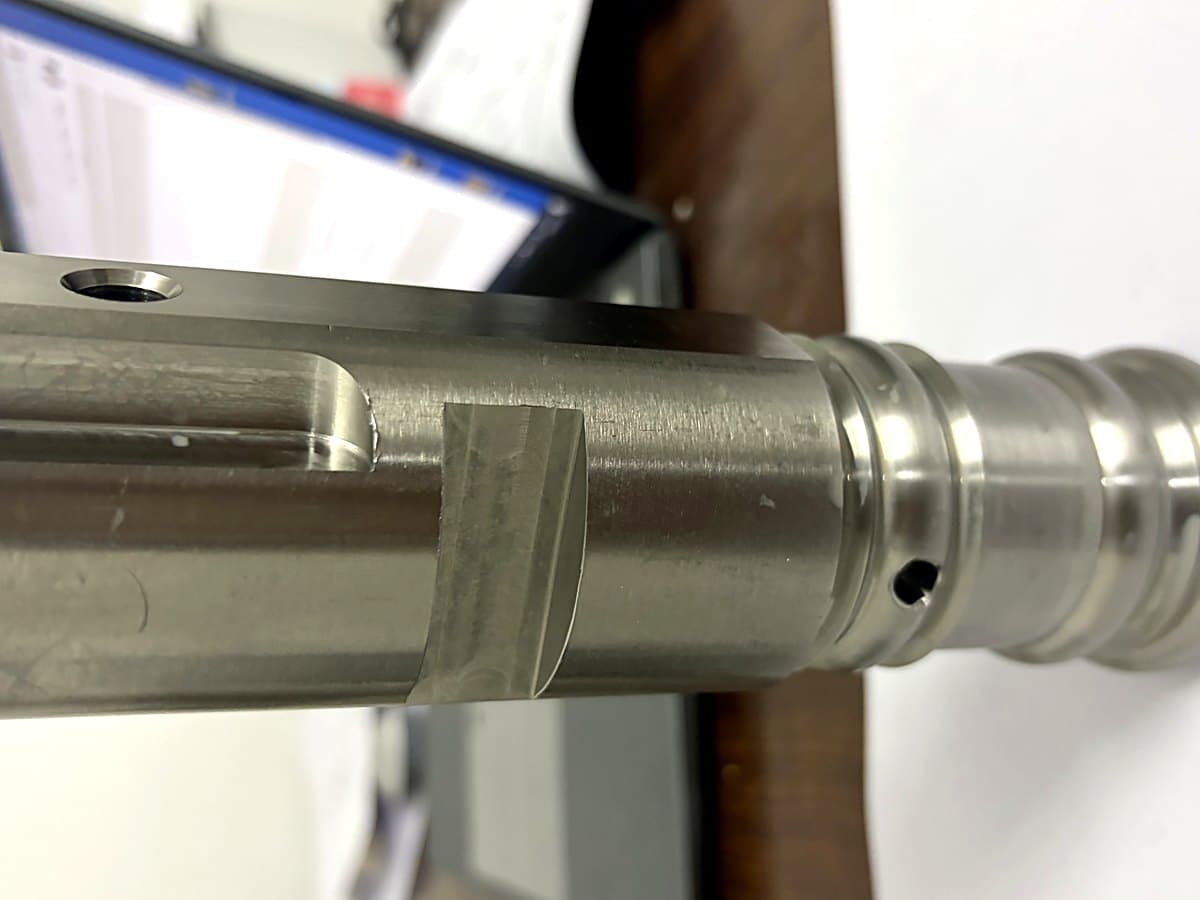
Hard turning instead of grinding
Hard turning with CBN is capable of surface finishes that used to require grinding, at a fraction of the cycle time, provided three conditions are met: the machine is rigid, the workpiece is short or well supported, and the insert is replaced on a fixed schedule rather than when the operator notices.
We track insert life per edge and change at 70 % of proven life. The surface finish is measured on every tenth part and recorded.
Why lay mattered here
A lip seal running on a surface with circumferential lay can pump fluid along the lay lines. The seal manufacturer's specification therefore called for a non-directional finish, which hard turning alone does not produce. The superfinishing belt pass removes the directional component while preserving the dimensional result from turning.
Send us your drawing today
STEP, IGES, X_T, DWG, DXF, PDF or STL. Every file is treated as confidential and covered by NDA on request.